
SANCCOB is advancing new methods to improve how adult African Penguin body condition is measured, drawing on years of integrated field monitoring, necropsy data, and molecular analysis.
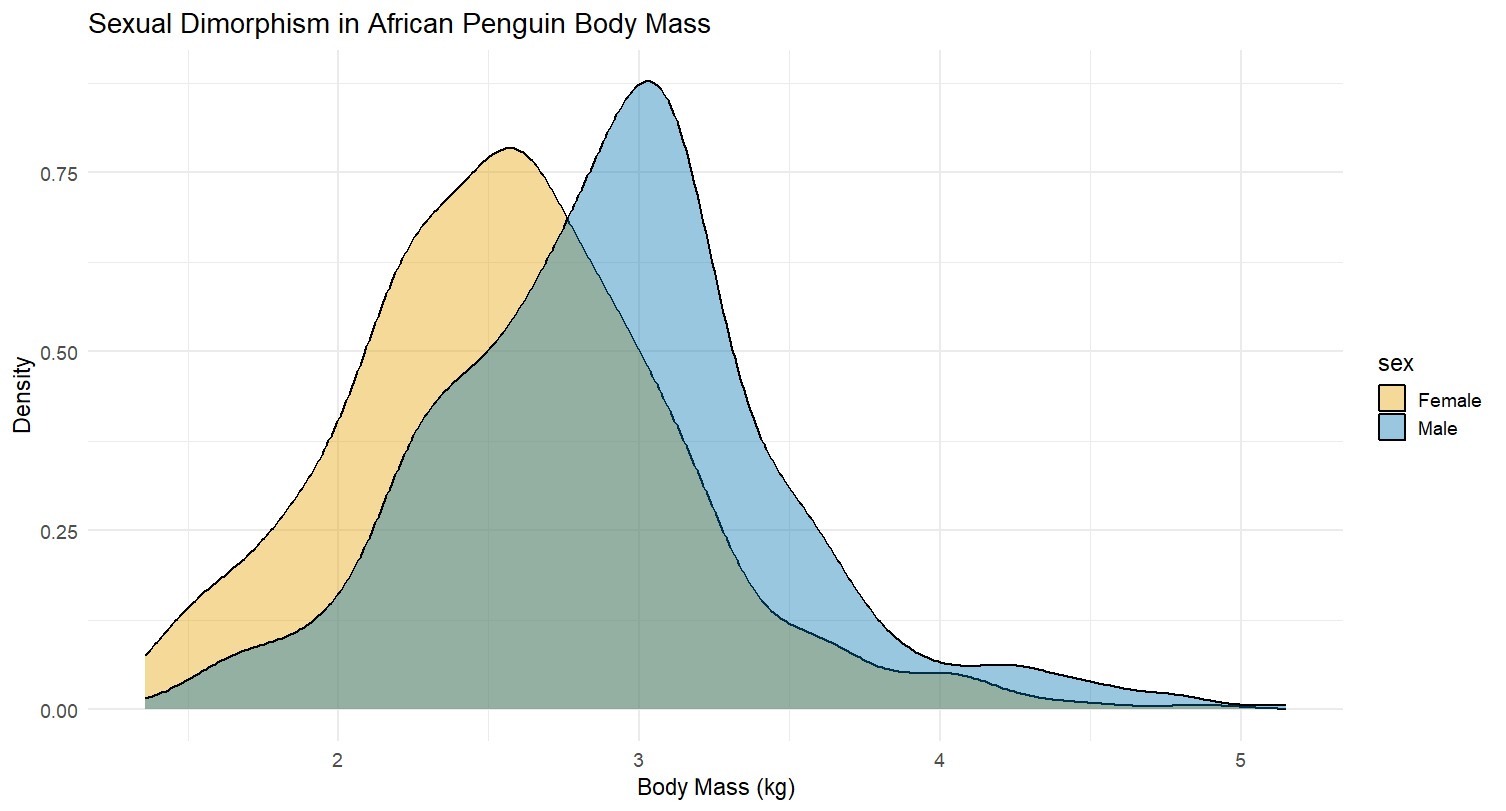
African Penguins exhibit subtle sexual dimorphism. Males are generally heavier and tend to have larger beaks, but the overlap between sexes means visual identification is unreliable in the field. Without confirmed sex, interpreting adult body mass and condition data carries a margin of uncertainty.
Since 2017, SANCCOB has been systematically building a dataset that links morphometric measurements to biological sex, confirmed through necropsies.
Birds use a ZW sex chromosome system, where males are ZZ and females are ZW. Molecular genetic sex can be determined accurately from feathers and blood samples collected from wild birds. This information can then be linked to Passive Integrated Transponder (PIT)-tag identification and field measurements such as body mass and beak dimensions, enabling researchers to connect confirmed biological sex to individual penguins monitored over time.
This integrated dataset allows SANCCOB to refine how adult body condition is interpreted. This will give field teams, including colony rangers monitoring tagged penguins, the tools needed to compare individual birds against sex-specific body condition benchmarks, improving the accuracy of health assessments and long-term population monitoring. In addition to improving field assessments, linking confirmed sex to long-term monitoring data also allows researchers to investigate patterns such as sex-biased mortality, differences in survival or foraging success between males and females, and broader demographic trends within African Penguin populations.
Accurate condition monitoring is essential for evaluating conservation interventions, including the six re-configuratedfisheries closures around African Penguin colonies. If these closures improve prey availability, this should ultimately be reflected in improved body condition of adult penguins.
Accounting for sex-based differences in body size strengthens the precision of these measurements and helps ensure that trends observed in the data reflect genuine ecological signals rather than natural variation between males and females.
This work forms part of a broader, collaborative research effort with BirdLife South Africa and contributes to SANCCOB’s data-supported, science-driven approach to seabird conservation.
Ensuring that conservation actions are guided by robust scientific evidence is a core principle of SANCCOB’s approach to seabird conservation. Research plays a central role in this approach, linking field monitoring, necropsy analysis, and emerging molecular tools to improve how African Penguin populations are measured and understood.


